
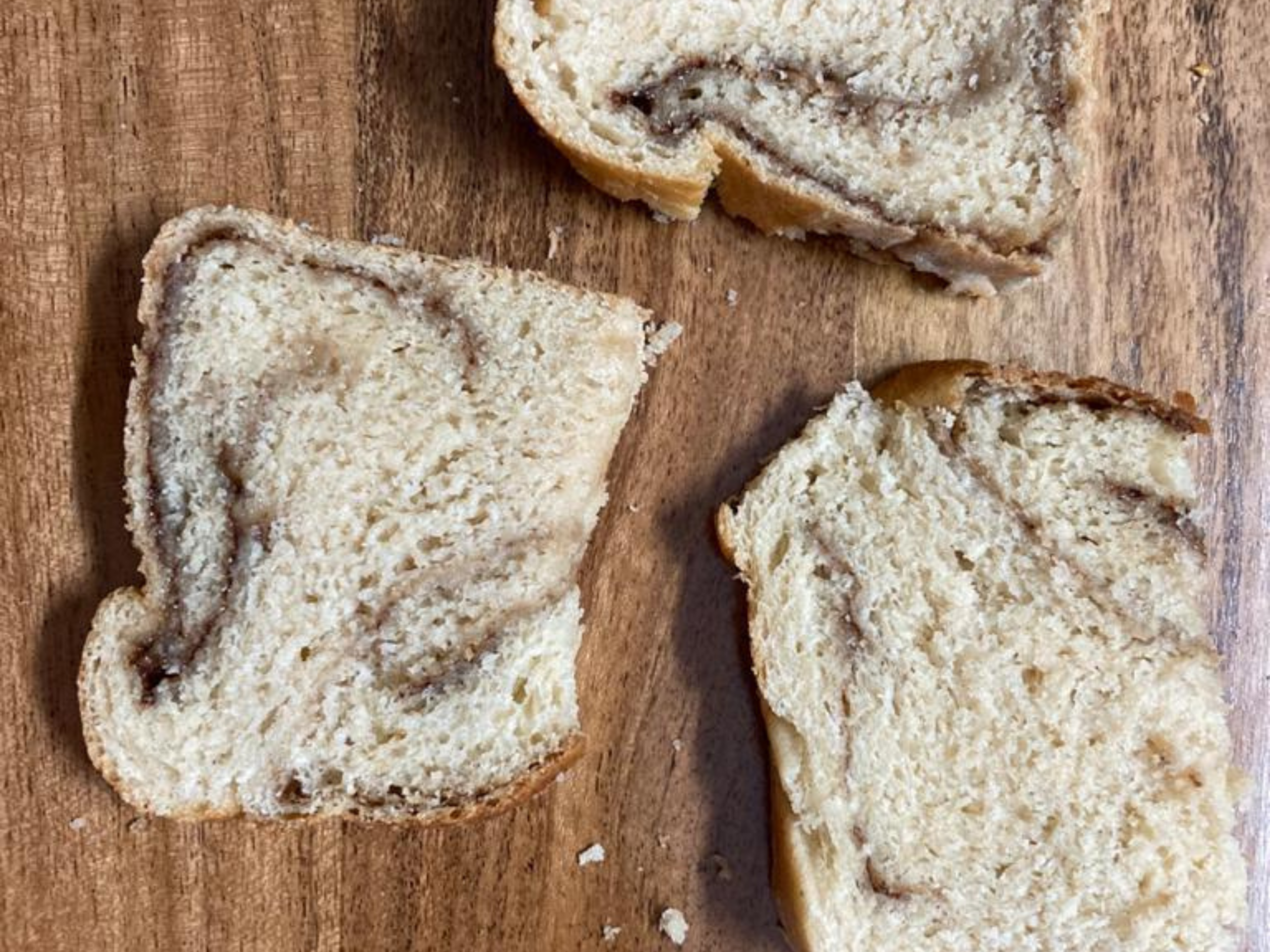
Cinnamon Bread: a healthy twist
Can you even imagine our Indian masala chai in winters without the punch and flavour of cinnamon, or our special cholas, rajma, dal makhni, aam chutney or an apple pie? Or the cinnabon rolls, which are the pride of many bakeries and cafes?
The flavour, the aroma and the hue this spice adds is soul satisfying! It is every baker’s favorite condiment and natural flavoring material. Not to forget that it is a rich source of calcium, iron and Vitamin K and has some antimicrobial properties which increase the shelf life of products. I digress. Back to Cinnamon!
Cinnamon rolls or Cinnabuns are a treat to the eyes and the palette ? I thought of baking some today. Most recipes call for butter, sugar, maida/plain/refined flour, whole fat milk for the dough and some more butter and sugar for the filling! And to top it all, some vanilla cream and butter frosting!
But, the bread aficionado and an unabashed fan of cinnamon that I am, I will be baking a Cinnamon bread except the original basis breads, which you can eat over the weekend as part of a leisurely breakfast or as a dessert later in the day, with some custard or whipped cream. This one will be delicious and aromatic and wholesome, with some nourishing ingredients!
Prep. Time
30 minutes
Total Time (Approx.)
2 hours and 30 minutes

Ingredients

Instructions

Baker’s Tips
Ingredients
Dry
-
Whole wheat flour – 2 cup (280 grams)
-
Maida/ strong unbleached bread flour- 1 cup (120 grams)
-
Yeast – 2 tsp
-
Sugar or honey – 2 tbsp
-
Milk powder – 2 tbsp
-
Salt – 1 tsp
Wet
Warm milk – 1 cup (240 ml)
Warm water – 1 or 2 tbsp, if needed
Olive oil – 2 tbsp
1 egg (beat well) OR Thick curd – 3 tbsp
Apple cider vinegar/white vinegar – 1 tsp OR Lemon juice – 1 tsp
Special ingredients for the filling
-
Cinnamon powder – 1 tbsp
-
Brown (powdered, or crystals) – 2 tbsp
-
Olive oil/butter – 2 tbsp
Instructions
Step 1
Mix all the dry ingredients and sift the flour well, as aeration helps in baking well structured breads. Do not add salt now, as it interferes with the activity of yeast. We will add it later.
Step 2
Mix and keep aside. Add the wet ingredients gradually, stir well and keep the dough aside for 1/2 an hour or so. This process is called autolyse. It helps in breaking down the enzymes and gluten formation for well structured and flavoured breads. We can now add salt to the dough.
Step 3
Add salt and knead well for 10 minutes or so. Enjoy the temporary mess – the dough will become more stable with the yeast feeding on sugars in the flour. Keep kneading. Learn to enjoy the kneading! Many of our fellow bakers agree that they find the kneading process very therapeutic. You are with yourself for these 10 minutes, and can chant, sing, weave a tale or reflect upon the daffodils of William Wordsworth as they flash upon the inward eye only when you are in solitude. Keep kneading the dough; resist adding flour. It will take shape. Keep kneading, stretching and folding it on itself (like folding a sheet of paper in half), for about 10 minutes for gluten to develop properly. Add some flour or olive oil to make the dough soft and smooth, as needed. The dough will become smooth over time. Keep at it.
Step 4
After the dough becomes smooth, start molding the dough in a large ball. As shown in the clip, place the ball on the kneading surface and drag it towards yourself. Repeat this a few times. The dough on the mat, and drag it towards you. Place the ball in a large greased bowl (preferably a glass bowl). Cover and keep the bowl in a dark and warm place. The fermentation process will double the dough in size, so make sure your bowl is large enough. The dough should not over ferment (i.e. the dough should not rise more than double its original size, else it then sinks).
Step 5
To test whether the dough has fermented and risen well, the dough should spring back after a gentle press. In my experience fermentation time in an Indian kitchen in warm weather would be around 45 minutes to 1 hour. In cool weather, its about 1&1/2 to 2 hours. Gently take the dough out from the bowl. Because of the greasing it should slide out. Do not pull it out else you disturb the activity of the yeast. Again gently deflate the dough with your fingertips – I call it dimpling. Deflate very gently using your fingers
Step 6
Once deflated, pull the dough from the edges towards the center, so that the smooth side is out (see the clip). Place it seam side down. Partition into smaller balls to make your buns. Collect into a large ball, seam side down.
Step 7
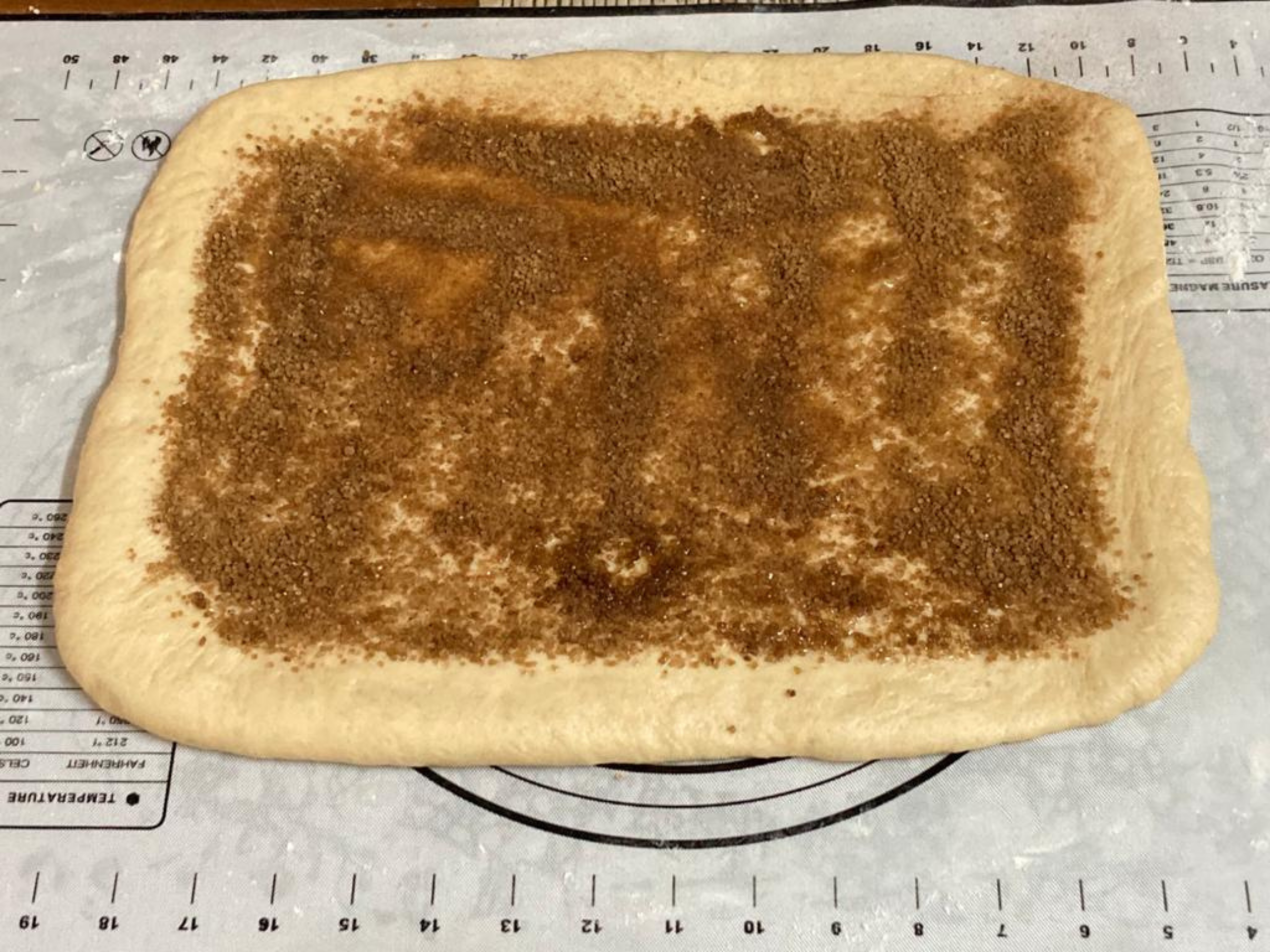
Roll the dough in shape of a rectangle about 16 inches by 8 inches.
Step 8
Base it with olive oil. Sprinkle the cinnamon and sugar mix generously on the rectangle leaving the margins clear and press it so that it sticks to the surface or make a paste of olive oil/ butter, sugar and cinnamon and spread on the rolled out dough. Cinnamon and sugar mix, over the based dough.
Step 9
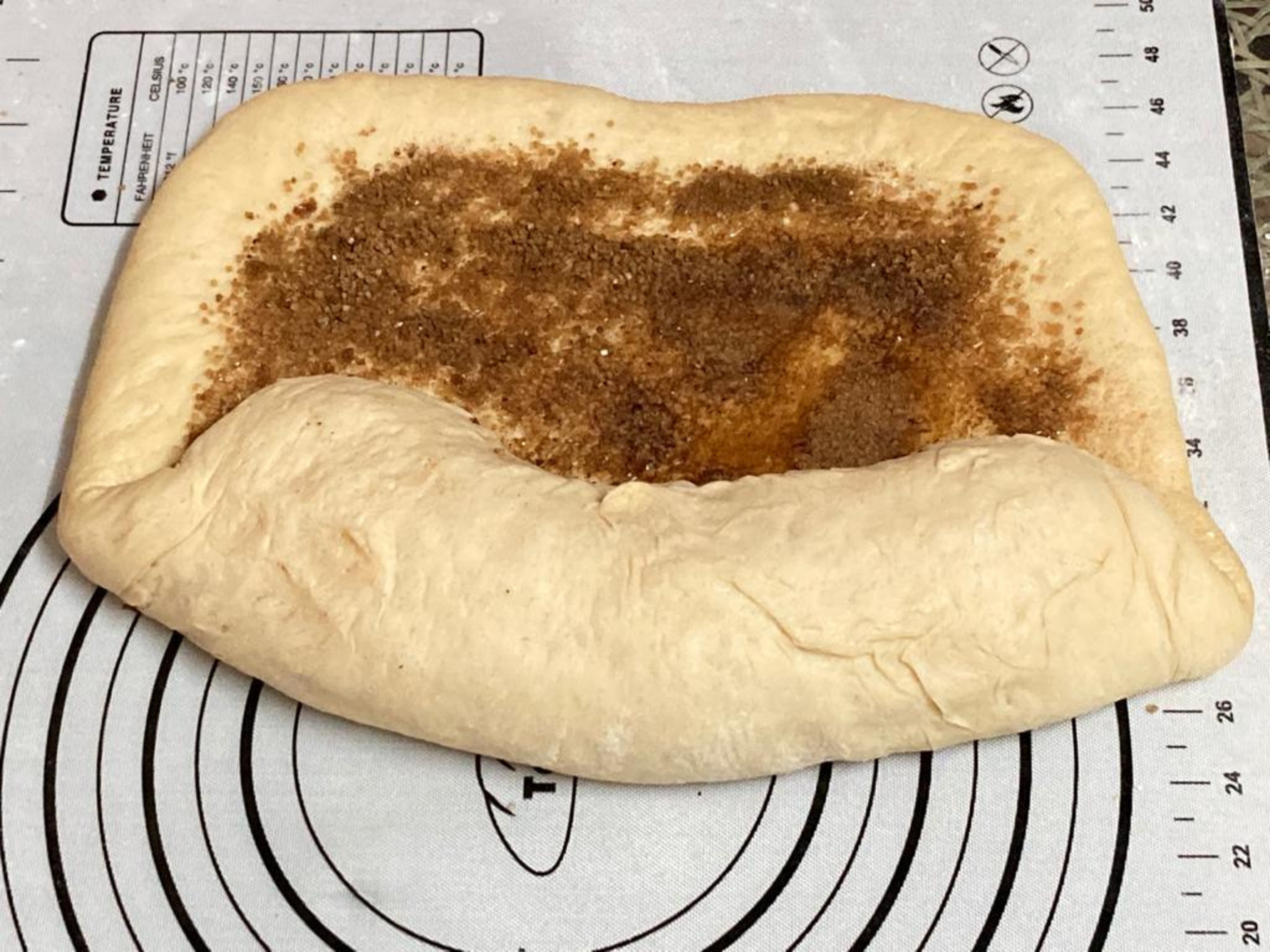
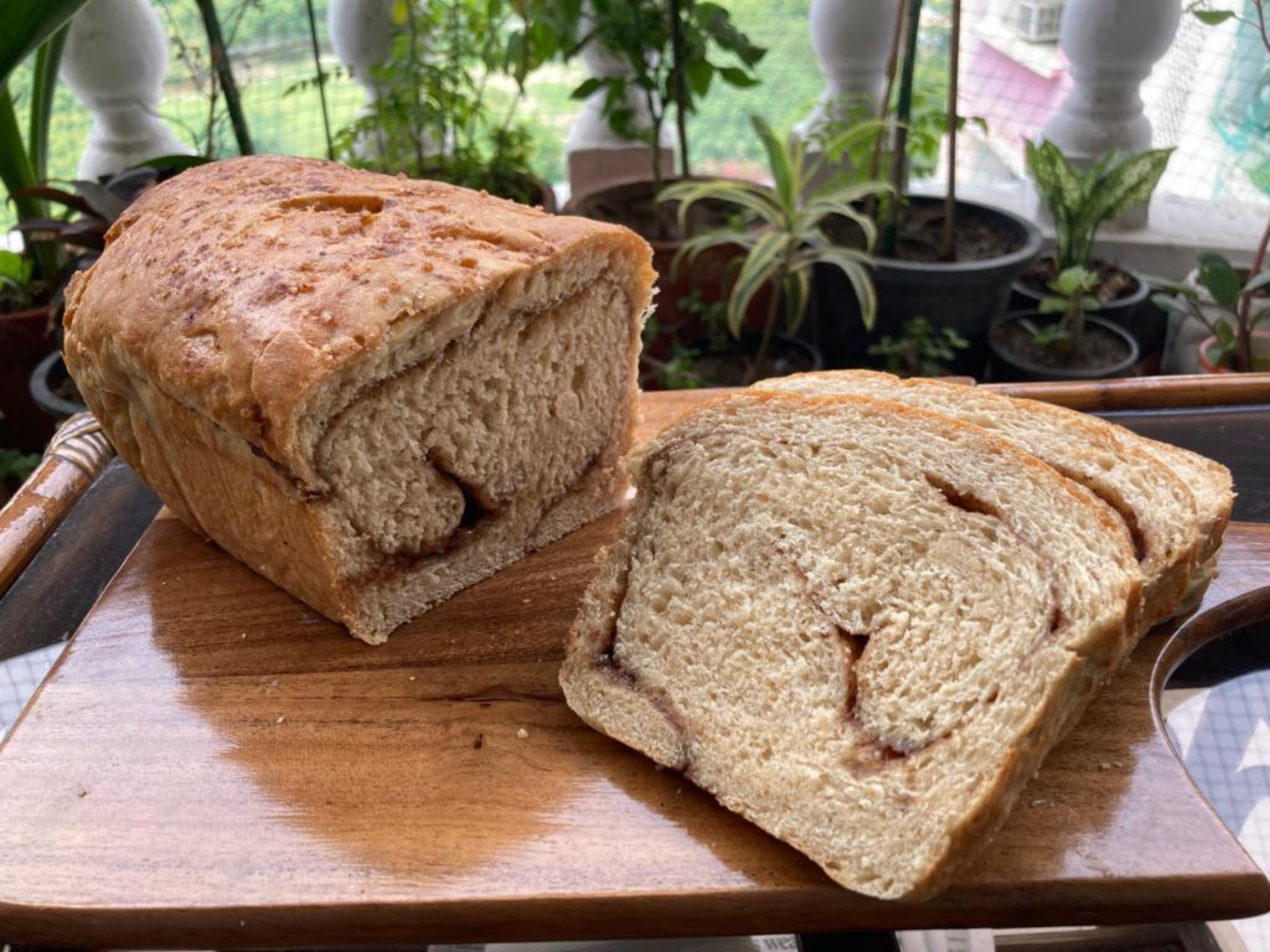
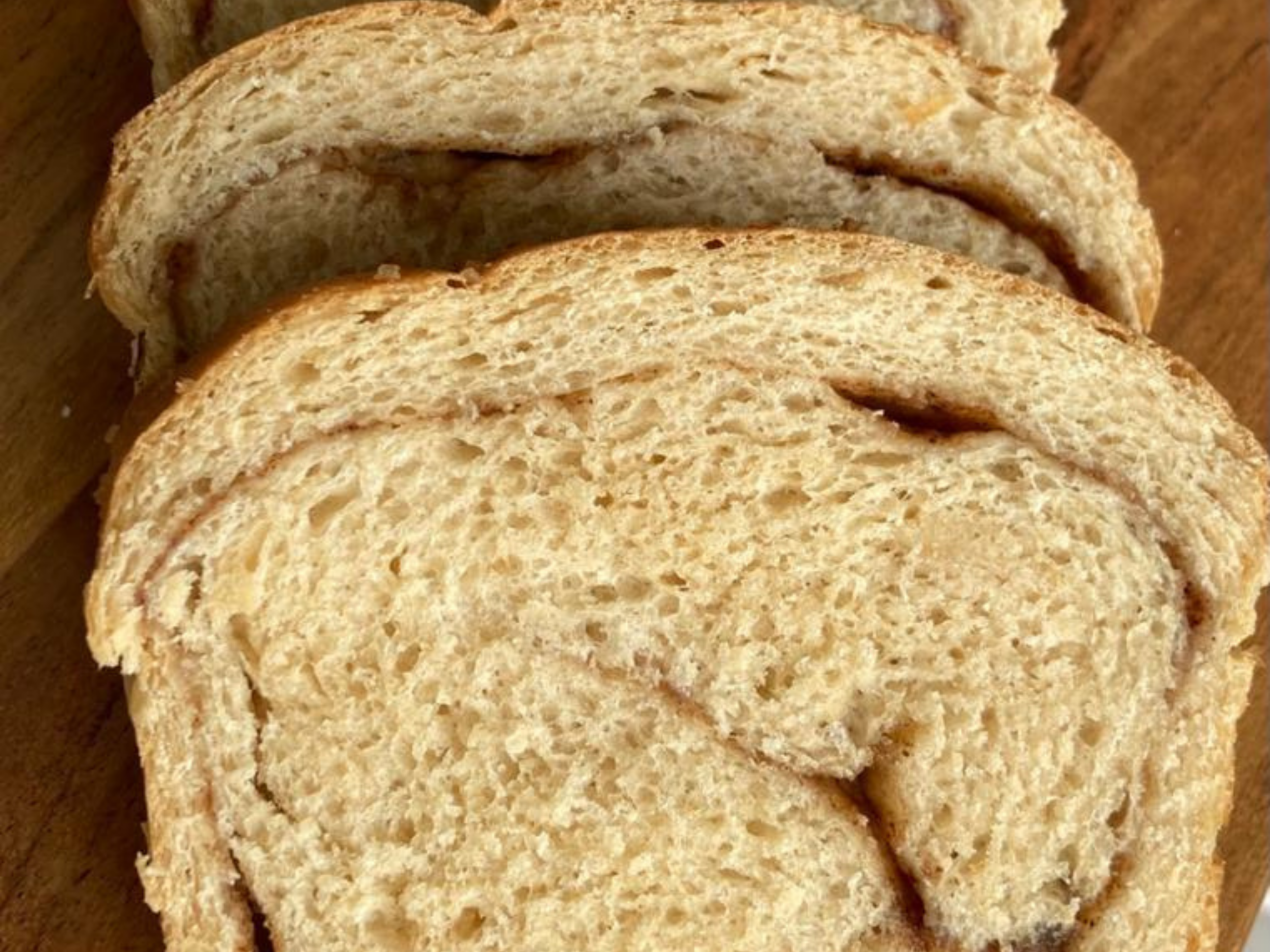
Roll it (like a jelly roll) from the shorter side of the rectangle so it resembles a log. Place it in the loaf tin, seam side down. The dough rolling process.
Step 10
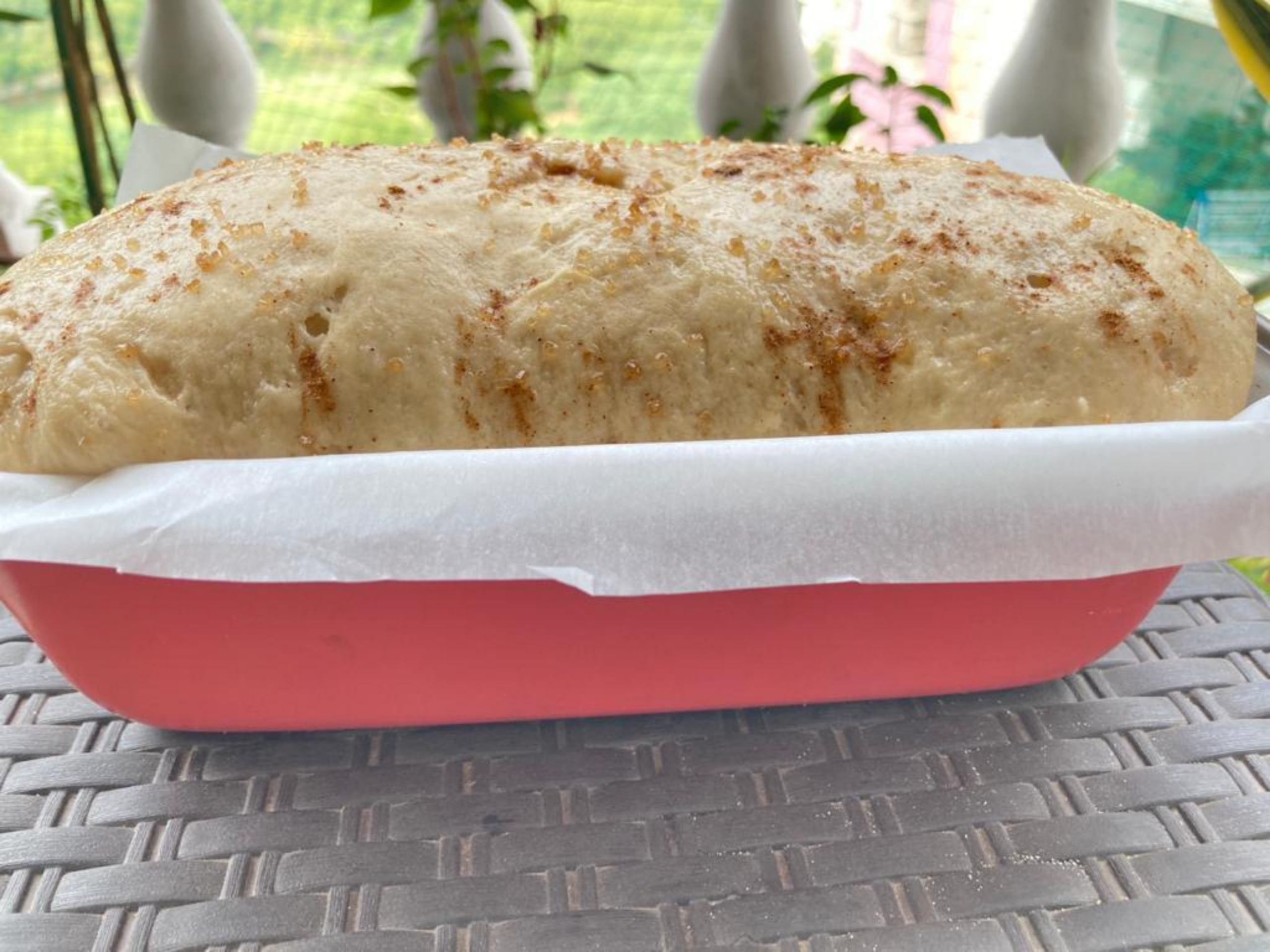
Cover it and prove for about 25 to 30 minutes. It should not over-prove or crack. If this happens there will be no oven spring and the shape and structure of the bread gets compromised.
Step 11
Brush the top with milk and honey or egg
Step 12
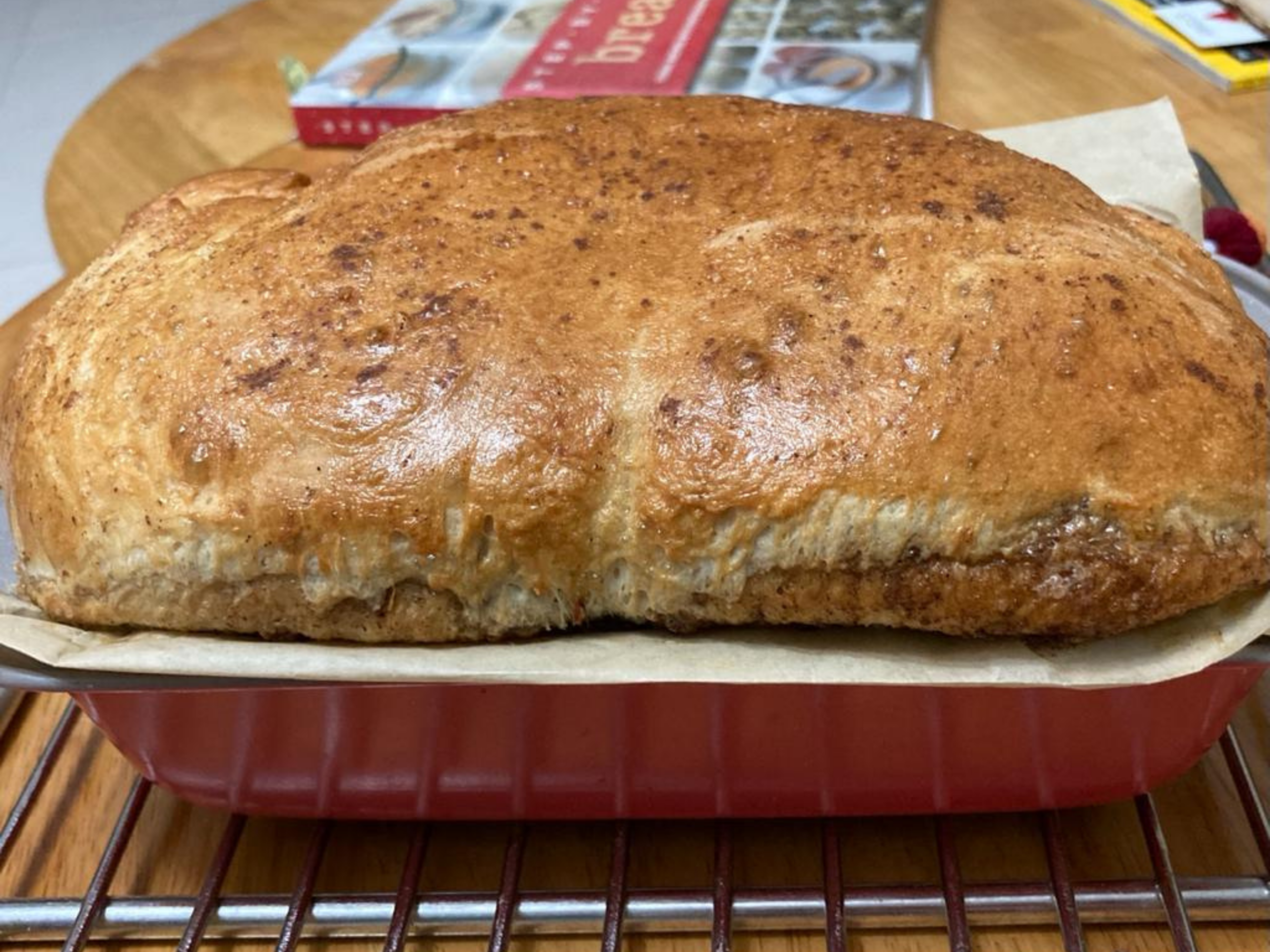
As a final touch, you could sprinkle some of the sugar & cinnamon mix on the top of the dough. Ready for baking.
Step 13
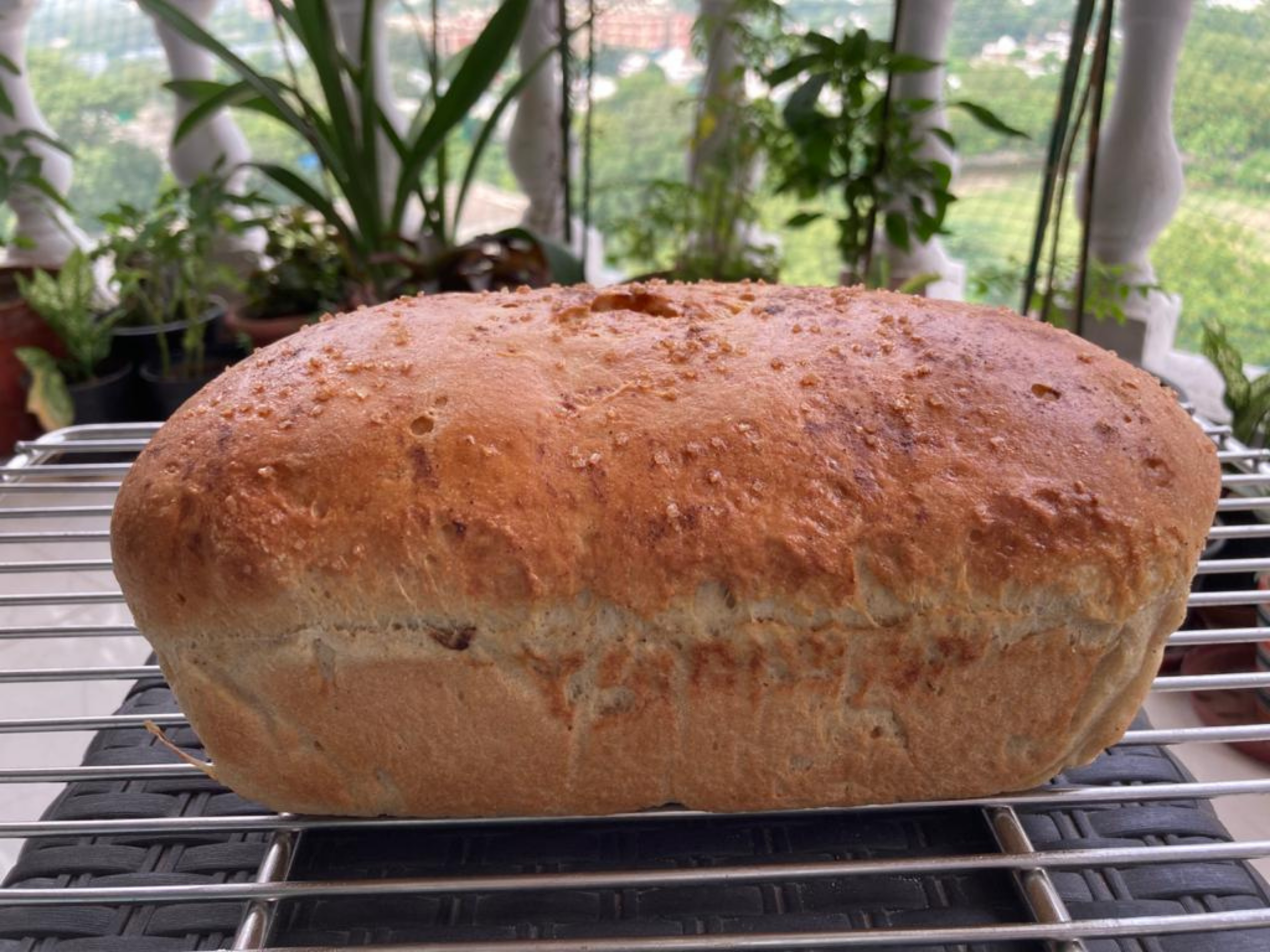
Bake in a preheated oven at 170-175 temperature for 30 to 35 minutes, till done. In the oven!
Baker’s Tips
- The dough should not be very soft and loose because basing it with butter/oil and adding sugar in the filling which melts while baking makes it delicate and moist.
- Before sprinkling cinnamon and sugar, you can also base it with hung curd (another healthy option as a substitute for butter).
- After sprinkling the spice and sugar mix, roll it gently but tightly so that the bread loaf gets a good shape. If there are gaps there will be a tunnel and the bread will not bake properly from inside.
- Sprinkle some caster sugar and cinnamon on the loaf as soon as it is out of the oven and still hot, for a nice flavour and texture. You can sprinkle some before baking also.
- If you substitute olive oil with butter in this recipe and add more sugar and eggs, it will be a rich dough , fit for cinnamon buns too. In this recipe the focus is both healthy bhi and tasty
- Can make a cream/ milk, butter, sugar and vanilla frosting as a topping, if the sweet tooth dominates or leave it for the cinnabuns – for the next time.